Published: December 19, 2025
Predicting Over 2.5 goals is one of the most popular ways to analyze football matches. Unlike match-winner picks, goal markets depend more on probability, game patterns, and measurable trends. This guide shows you how to use stats like xG, shots on target, and goal averages to make smarter Over 2.5 decisions.
Introduction
Many beginners rely on intuition, team names, or recent scorelines. The problem is that football has short-term randomness. A match can finish 0-0 even when it has enough chances to produce goals, and a match can end 4-0 from a small number of big chances.
The solution is a structured approach using statistics that describe chance quality, attacking intent, and defensive weakness. When you combine those stats with team news and match context, your Over 2.5 selections become more consistent over time.
For a broader framework that covers goal markets like Over, Under, and goal ranges, read: How to Predict Total Goals in Football Using Statistics.
What Does Over 2.5 Goals Mean in Football?
Over 2.5 goals means a match must have at least three total goals for the prediction to be correct.
Examples
- 2-1, 3-0, 2-2 qualify as Over 2.5 goals
- 1-1, 2-0, 0-2 do not qualify
This market is popular because it avoids picking a winner, and it fits well in leagues where attacking football is common. Still, it requires filtering. Not every match is suitable.
Why Statistics Are Essential for Over 2.5 Goals Predictions
Why Guesswork Fails
Football outcomes are influenced by game state, refereeing decisions, weather, and variance. If you rely only on team reputation or what you feel, you will usually overrate popular clubs and underrate match dynamics.
Why Data Improves Accuracy
Stats allow you to measure what teams repeatedly do on the pitch. Some teams consistently create quality chances. Some concede a high volume of shots. These patterns help you estimate whether a match is likely to reach three goals.
A strong Over 2.5 decision usually comes from a combination of indicators, not one stat.
Key Statistics to Use When Predicting Over 2.5 Goals
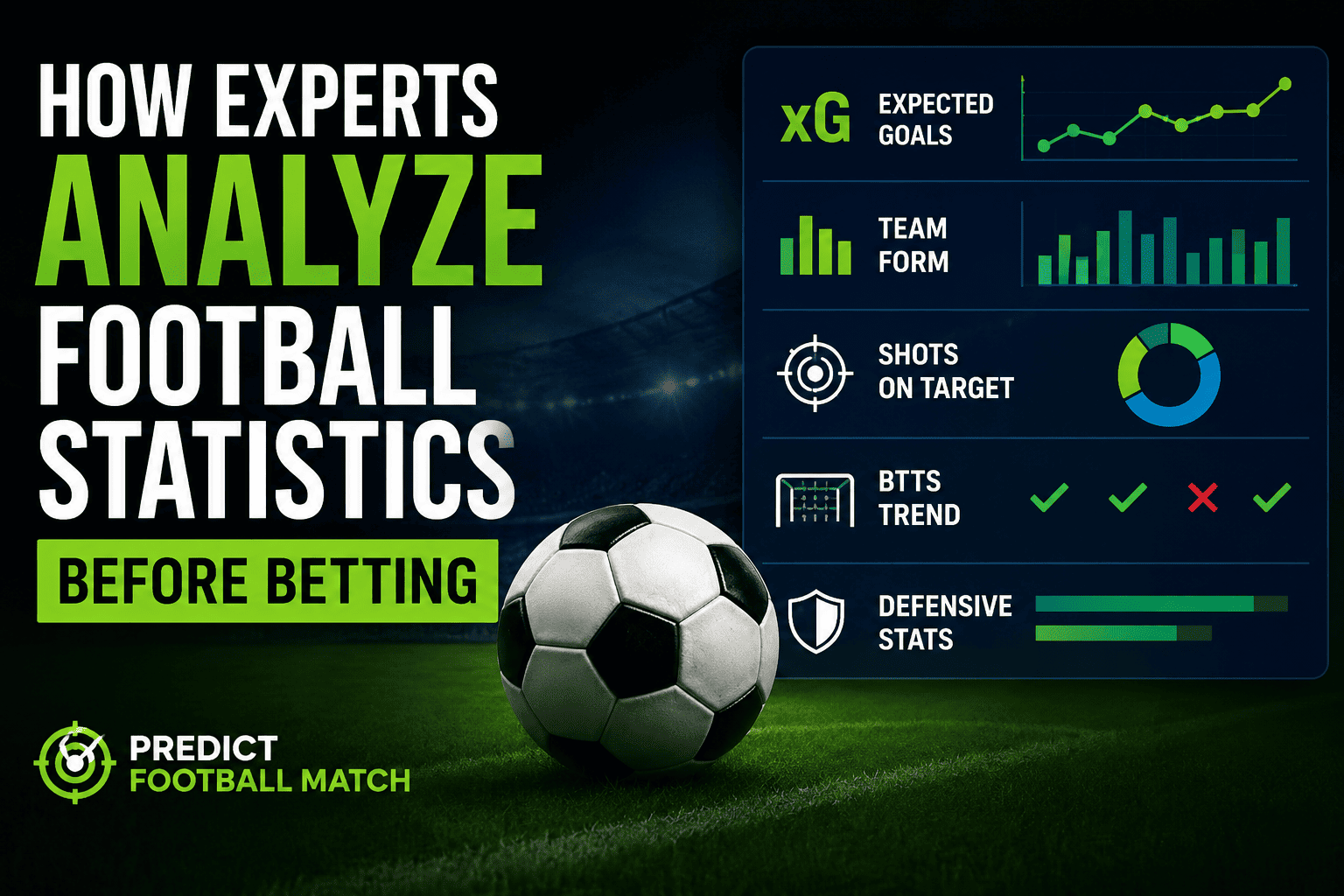
Expected Goals (xG)
Expected Goals, also called xG, measures the quality of chances created, not just goals scored. xG is more stable than actual goals because finishing can be random in small samples.
Practical rule: If the combined team xG is around 2.7 or higher, Over 2.5 goals becomes a strong candidate.
- High xG usually signals consistent chance creation
- Low xG often points to slow matches and low-quality attacks
- xG helps you avoid being fooled by lucky finishing streaks
Goals Scored and Conceded Per Match
This is the foundation metric. Track goals scored and conceded per match, and split it into home and away performance.
Useful benchmarks:
- Teams scoring 1.5+ goals per match
- Teams conceding 1.3+ goals per match
The best Over 2.5 matches often include at least one weak defense. Two teams with average attacks can still go Over 2.5 if both defenses allow high-quality chances.
Shots on Target Per Game
Shots on target show how often teams force saves and create real danger. Higher shot volume increases the probability of goals.
Recommended threshold: A combined average of 8 or more shots on target per match is a positive sign.
- High shots on target usually means sustained pressure
- Low shots on target usually means a match is cagey or defensive
Big Chances Created and Missed
Big chances reflect clear goal-scoring opportunities. Teams that consistently create big chances are more likely to contribute to Over 2.5 outcomes.
Missed big chances can also be useful. A team missing many big chances may still be producing good attacks, and goals can follow soon after due to regression.
Recent Form (Last 8 to 10 Matches)
Form matters, but it must be measured properly. Use a sample of 8 to 10 matches and consider strength of opponents. Track an Over 2.5 hit rate as a percentage.
Simple filter: Over 2.5 hit rate above 60 percent across the last 8 to 10 matches is encouraging.
Avoid overreacting to one high-scoring result. One 5-0 does not guarantee goals next week.
Head-to-Head (H2H) Stats: When They Matter
Head-to-head stats can support your decision, but they should not be your main reason. H2H is most useful when teams play often and tactical styles are stable.
Use H2H When
- Teams play regularly in the same league
- Managers and tactical styles have stayed similar
- You focus on the last 2 to 3 seasons, not older history
Avoid H2H When
- Squads have changed heavily since the previous meetings
- Teams were in different divisions
- The data is from more than three seasons ago
Treat H2H as confirmation, not the foundation of your prediction.
Tactical and Situational Factors That Increase Goals
Playing Style and Formation
Some teams are naturally built for high scoring matches because they press high, play wide, and attack with numbers. Formations can indicate intent.
Often higher scoring:
- 4-3-3
- 3-4-3
- 4-2-3-1 with aggressive pressing
Often lower scoring:
- 5-4-1
- 4-4-2 low block
High pressing increases turnovers and transitions, and transitions often create big chances.
Team News, Injuries, and Defensive Absences
Team news can shift a match from borderline to strong. Missing defenders and backup goalkeepers increase errors and reduce defensive coordination.
- Missing center backs increases vulnerability to crosses and set pieces
- Missing full backs can weaken defensive width
- Backup goalkeepers often reduce shot-stopping quality
Motivation and Match Context
Motivation changes match behavior. Teams chasing three points are more likely to attack, especially late in games.
High-goal scenarios:
- Must-win matches
- Relegation battles
- End-of-season fixtures with goal-difference pressure
Lower-goal scenarios:
- First-leg knockout matches
- Teams protecting a narrow advantage
- Matches where a draw suits both teams
Best Leagues for Over 2.5 Goals Predictions
Some leagues produce goals more consistently due to tactical culture and pace. Over 2.5 tends to perform well in leagues known for attacking football.
- Bundesliga
- Eredivisie
- Swiss Super League
- Danish Superliga
- Austrian Bundesliga
League context should never replace match-level analysis, but it helps you prioritize where to look.
Over 2.5 Goals Prediction Checklist
- Combined xG is around 2.7 or higher
- Both teams score regularly, especially in their home or away split
- High shots on target average, ideally 8 or more combined
- At least one defense has a weak goals conceded profile
- Attacking lineups are confirmed, or key defenders are missing
If three or more of these conditions fail, avoid the match and move on. Filtering is a major edge.
Common Mistakes When Predicting Over 2.5 Goals
- Relying on recent scorelines only. Scorelines can be misleading in small samples.
- Ignoring team news. A missing defender can change everything.
- Overvaluing head-to-head history. Old matches often have little relevance.
- Chasing low odds blindly. Low odds do not guarantee probability is correctly priced.
- Betting too many matches. The best selections come from strict filtering.
Over 2.5 Goals vs BTTS
Over 2.5 and BTTS are related markets, but they are not the same.
- Over 2.5 can win with 3-0
- BTTS requires both teams to score at least once
Use BTTS when both teams attack consistently but scorelines often stay around 1-1 or 2-1. Use Over 2.5 when one team can dominate and still produce three goals without help.
Some matches are more controlled and do not suit Over 2.5. In those cases, goal range markets can offer more precision. Read: Goal Range Prediction Explained (1–2, 2–3, 2–4 Goals).
Final Verdict: Can You Predict Over 2.5 Goals Using Stats?
Yes. You can predict Over 2.5 goals more reliably when you combine stable indicators like xG and shots on target with context such as team news, motivation, and tactical style.
No single stat guarantees goals, but structured analysis improves decision-making and helps you avoid low-probability matches. The most important skill is filtering.