Goal Range Prediction Explained
How to Predict 1–2 Goals, 2–3 Goals, and 2–4 Goals Using Statistics
Introduction
Goal range prediction is one of the most misunderstood but powerful football goal markets. Instead of predicting whether a match will go Over or Under a fixed line, goal range markets focus on a specific scoring window. If you are new to this concept, understanding the goal range meaning is essential before applying any prediction strategy.
- 1–2 total goals
- 2–3 total goals
- 2–4 total goals
These markets are ideal when a match shows controlled attacking output rather than extreme low or high scoring potential. This guide explains what goal range prediction is, when it works best, and how to predict goal ranges using statistics.
What Is Goal Range Prediction in Football?
Goal range prediction means selecting a match to finish within a specific number of total goals.
- Goal range 1–2 wins if the match ends 1-0, 1-1, or 2-0
- Goal range 2–3 wins if the match ends 2-0, 2-1, 1-2, or 3-0
- Goal range 2–4 wins if the match ends with 2, 3, or 4 total goals
Unlike Over or Under markets, goal range betting rewards precision, not extremes.
Why Goal Range Markets Exist
Goal range markets exist because many football matches rarely explode into very high scores, rarely end goalless, and frequently finish within predictable scoring windows.
Bookmakers price these markets carefully, but statistics often reveal value, especially in balanced fixtures where teams play with structure.
Goal Range vs Over and Under Markets
Over and Under Markets
Over and Under markets focus on crossing a single goal threshold. For example, Over 2.5 requires three or more goals.
Goal Range Markets
Goal range markets focus on staying within a defined window. For example, 2–3 goals fails if the match ends 4-1.
If you want a broader understanding of how goal lines work, read our Total Goals Prediction Guide: How to Predict Total Goals in Football Using Statistics .
Goal ranges are best used when you expect goals, but not chaos.
Core Statistics for Goal Range Prediction
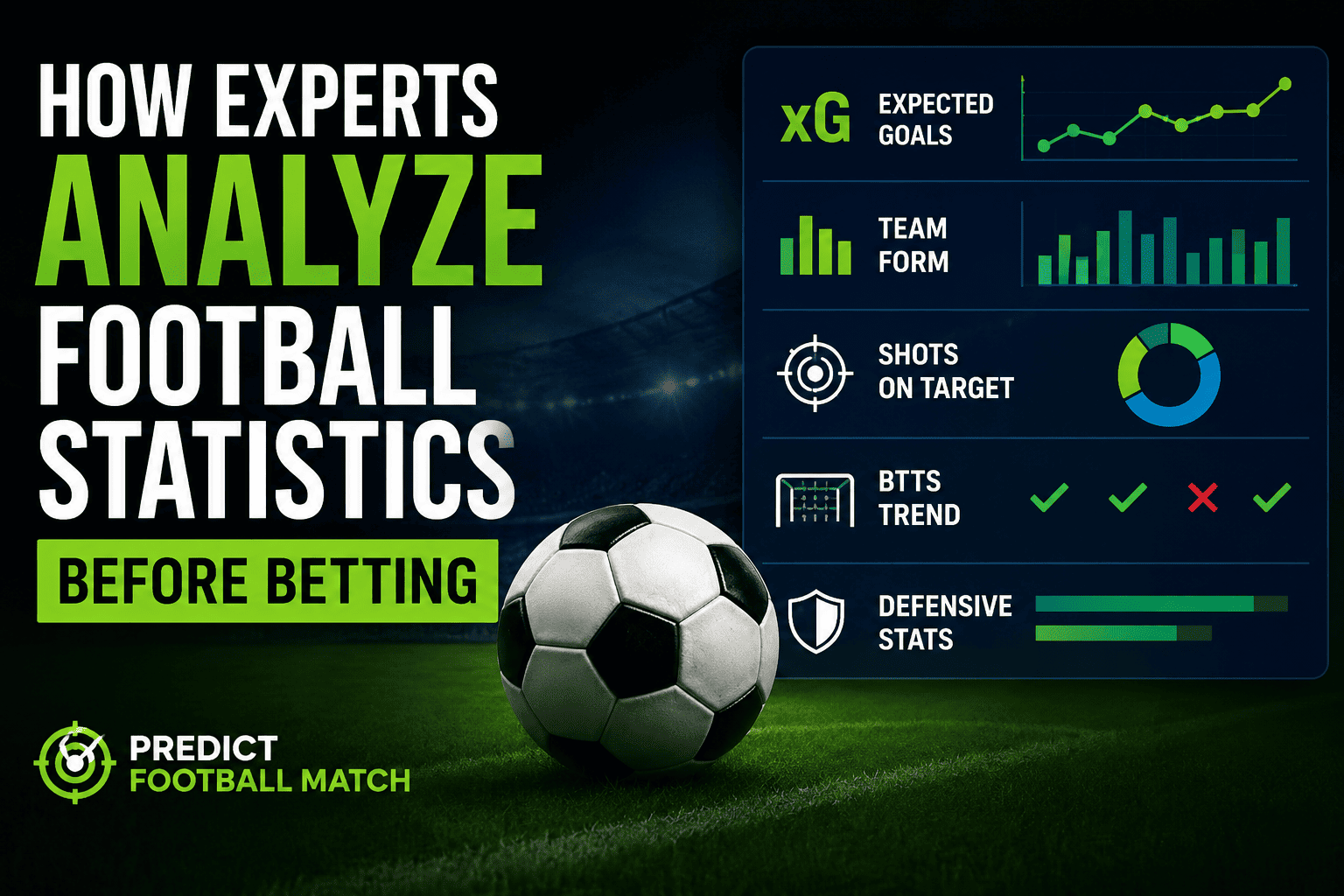
Expected Goals (xG)
Expected Goals is the most important metric for goal range analysis.
- Combined xG below 2.0 often supports 0–1 or 1–2 ranges
- Combined xG between 2.2 and 2.8 strongly supports 2–3 goals
- Combined xG above 3.2 often breaks goal range limits
Goal ranges perform best when xG is moderate and stable, not extreme.
Goals Scored and Conceded Per Match
This confirms whether xG patterns translate into real results.
- Teams scoring between 1.0 and 1.6 goals per match
- Teams conceding between 1.0 and 1.5 goals per match
Avoid matches where one team scores over 2.2 goals per match or one team regularly concedes more than 2 goals.
Shots on Target Per Match
Shots on target show attacking pressure without exaggeration.
- Combined shots on target between 6 and 9 often support goal ranges
- Very low shot volume suggests Under markets
- Very high shot volume often fits Over markets more than ranges
Big Chances Created
Big chances should exist, but not excessively. Range-friendly matches usually feature one or two big chances per team. Matches with constant big chances often exceed the range.
Using Recent Form for Goal Ranges
Recent form is critical when predicting ranges. Analyze the last 8 to 10 matches and focus on recurring scorelines. Ignore extreme outliers such as 5-0 or 4-4.
Strong signals include repeated 1-1, 2-0, or 2-1 results, and consistent total goals staying within the same window.
Head-to-Head Data and Goal Ranges
Head-to-head data can be useful for goal ranges when applied correctly. Use it when teams meet regularly and styles are consistent, and avoid it when squads and managers have changed.
Tactical Conditions That Support Goal Ranges
Playing Style
Goal range friendly styles include structured buildup, controlled pressing, and compact defensive lines. Styles that often break ranges include all-out pressing, defensive chaos, and constant counterattacks.
Formations
Goal ranges perform best when formations balance attack and defense. Common examples include 4-2-3-1, 4-4-2, and 3-5-2. Two balanced formations facing each other often produce controlled scorelines.
Team News and Its Impact on Goal Ranges
Team news can invalidate a goal range instantly. Avoid ranges when multiple defenders are missing, a backup goalkeeper starts, or key defensive midfielders are absent. Goal ranges require defensive stability.
When to Use Specific Goal Ranges
Goal Range 1–2 Goals
Best used when combined xG is below 2.2, both teams defend well, and attacking output is limited. Common scorelines include 1-0, 1-1, and 2-0.
Goal Range 2–3 Goals
This is the most popular and reliable range. Best used when combined xG is between 2.3 and 2.8, both teams score regularly, and defenses are average.
For matches that lean slightly higher, compare this with your Over 2.5 goals analysis: How to Predict Over 2.5 Goals Using Statistics .
Goal Range 2–4 Goals
This range offers flexibility while avoiding extremes. Best used when combined xG is between 2.6 and 3.2, one team can score multiple goals, and match tempo is moderate to high.
Best Leagues for Goal Range Markets
Goal ranges perform best in leagues with tactical discipline.
- Serie A
- Ligue 1
- English Championship
- La Liga mid-table fixtures
Goal Range Prediction Checklist
- Expected goals fall within the target range
- Shot volume is moderate
- Defensive structure is intact
- Team news supports stability
- Recent scorelines show repetition
If two or more conditions fail, avoid the range.
Common Mistakes in Goal Range Prediction
- Using goal ranges in chaotic matches
- Ignoring team news
- Chasing high odds
- Treating ranges like Over markets
- Betting ranges in rivalry or derby games
Precision and discipline are key.
Final Verdict
Goal range prediction is a precision-based football market. It rewards balance, structure, and statistical discipline. When supported by expected goals, shot volume, tactical control, and consistent form, goal ranges offer an excellent alternative to traditional Over and Under markets.
The edge comes from selectivity, not volume.